Grant Funding in Support of CPD – NEW DEADLINE

We are once again offering grant funding in support of CPD! The newly revised CPD Advancement and Ideas Grants are intended to support research and scholarly activities focused on the continuing professional development of practicing healthcare professionals.

Under the new structure, two streams of opportunities will be available:

  • One grant worth up to $10,000 CAD with required matching funds focused on Advancing the Science of CPD.
  • Up to three grants worth up to $5,000 CAD with no required matching funds focused on CPD Ideas.

The application deadline is Monday, May 9th, 2022.  See the CPD Research and Development Grants Program page for more information about this funding opportunity.

If you missed out on the free online workshop on October 14, view the recording for an overview of educational scholarship in CPD and an outline of key steps and resources for successful grant submission at https://www.cpd.utoronto.ca/scholarship/grants.

Stimulating Simulation Education

There is no denying that simulation-based training has revolutionized medical education. At U of T Medicine and across our affiliated teaching hospitals, we’re fortunate to have a broad range of simulation centres. We also use simulation extensively in the training we deliver in our MD and post-MD programs. Our learners get the opportunity to practice delicate techniques or complex diagnoses on very highly credible and nuanced models.

In addition, we’re active in SIM-one, a not-for-profit organization connecting the simulation community across Canada and beyond. It includes over 1,700 individuals involved in all levels of healthcare simulation, from a variety of healthcare professions and sectors, including higher education, hospitals, government and industry.

As with any major innovation, though, it’s critical to ensure we’re using it effectively and integrating it successfully into our training programs. A 2011 report by the Association of American Medical Colleges observed that “simulation has the potential to revolutionize health care and address the patient safety issues if appropriately utilized and integrated into the educational and organizational improvement process.”

Simply put, medical simulation-based education is a big, broad world. We need to stay on top of emerging trends and new technology to ensure we’re making optimal use of it. To help us do that, we’ve established a new role — Faculty Lead, Simulation Education Integration — and appointed Professor Doug Campbell to that post. He will work to consolidate, integrate and evaluate simulation education across U of T and our affiliated teaching hospitals.

Professor Campbell is well qualified for this task. An Associate Professor of Pediatrics, he is also the Medical Director of the Allan Waters Family Simulation Centre and Director of Neonatal Intensive Care Unit at St. Michael’s Hospital. In 2012, he was awarded the Marvin Gerstein Award, nominated by the pediatric residents of the University of Toronto for his outstanding teaching. I am very glad he agreed to undertake this important new role.

Supporting him will be the newly established Simulation Education Advisory Committee. It will be chaired by Professor Campbell, with Professor Sal Spadafora, Vice Dean of Post MD Education, serving as Associate Chair. The committee will include representation from the Faculty, simulation centres, affiliated hospitals, the Centre for Faculty Development, SIM-one, and undergraduate and postgraduate learners. The objective is to form a coordinated network to provide advice, promote best practices, identify opportunities for improved collaboration, and increased access to simulation equipment and other resources.

These steps don’t just reflect the significance of simulation-based training, but our commitment to improving and innovating learning at U of T Medicine. Coordinating our activities will not just provide greater efficiencies, but improve the experience for our students and ensure we’re capitalizing on the wealth of opportunities simulation can provide.


Trevor Young
Dean, Faculty of Medicine
Vice-Provost, Relations with Health Care Institutions

Dr. Jason Fischer: The Future of Paediatric Emergency Medicine.

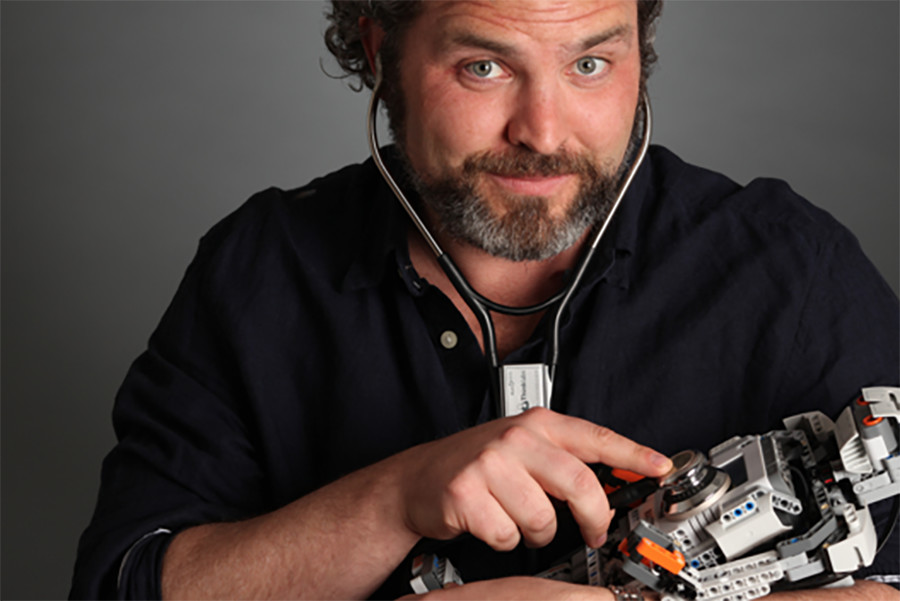
Jason W.J. Fischer, MSc, MD, FACEP, found his passion for improving the paediatric stream of emergency healthcare during his emergency medicine residency in East Timor. There, he found more children than adults who were in need of his help.

Jason Fischer

“Pediatric emergency medicine offers a unique challenge… emergencies are more sporadic and more unpredictable, [with] incredibly high stakes,” Dr. Fischer shared in an interview with Alumni Relations at St. George’s University.

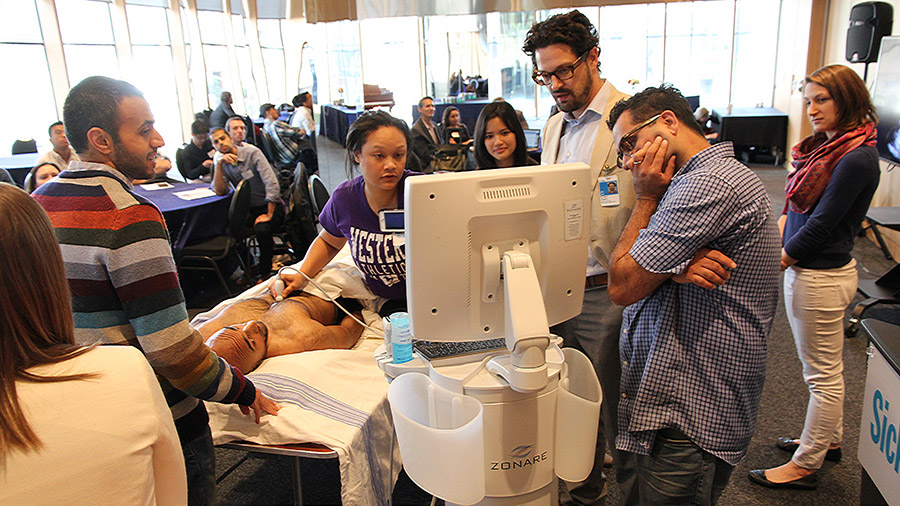
He honed his skills in paediatric emergency medicine in a number of diverse settings, from East Timor to California to Europe, and now, by introducing portable ultrasound technology through his leading role in the Emergency Medicine Division at SickKids, he’s changing the field from the inside out.

Armed with his global perspective and training, he’s now in charge of the Emergency Ultrasound Program at SickKids including the Paediatric Emergency Ultrasound Fellowship – the first of its kind in Canada – in which he focuses on the use of ultrasound-guided regional anaesthesia in the emergency setting.

“It’s very exciting when you identify a new technology that’s practical and really makes a difference in patient care.”

He will also be hosting a workshop at the 29th Annual Update in Emergency Medicine entitled, “What Keeps Me Up at Night: A Chief’s Look at Challenging Cases and Solutions from the SickKids ED.” He will be speaking about how he is reimagining ketamine, known in popular culture as the date rape drug, by putting it to use as an invaluable tool for controlling pain without needles, and introducing Point of Care Ultrasound (POCUS), which allows physicians to use ultrasound to rapidly assess the patient’s condition at the point of care with handheld systems.

You can follow Dr. Fischer on Twitter @eUSMD

Sources:
http://www.sickkids.ca/pem-pocus/aboutus/Jason-Fischer.html

http://www.sgu.edu/alumni/alumni-profiles-jason-fischer.html

http://pie.med.utoronto.ca/POCUS/

Innovation + Education Showcase 3D Simulation Training Tool

On Wednesday March 11, 2015, the Innovations + Education (i+e) Office at the Faculty of Medicine, University of Toronto hosted the latest in a series of seminars showcasing cutting-edge tools and technologies that enable new ways of creating, presenting, and distributing educational content.

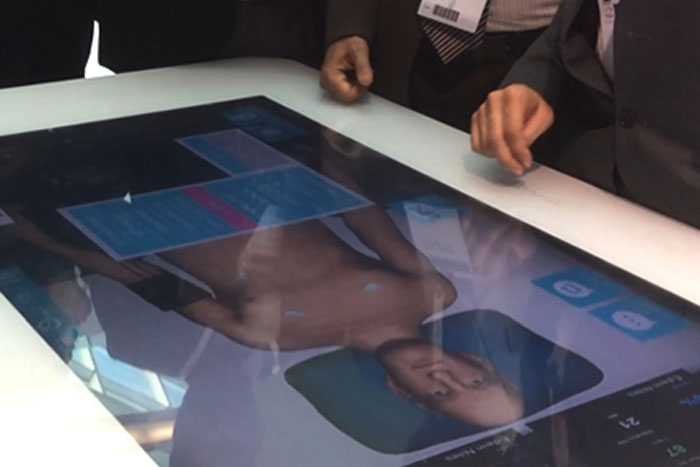
Body Interact™ is a 3D e-Health medical training simulation tool that accelerates critical thinking and clinical decision-making for acute and chronic care scenarios. This is done through an interactive screen and gaming technology, playing out possible scenarios using simulation to encourage collaboration and skills development. This resource can be customized to suit particular educational environments including distance learning.

In order to encourage clinical educators to start incorporating new technologies into their curriculum, education leaders at the University of Toronto were invited to attend this presentation. The use of innovative tools, like Body Interact, may better enhance medical education and work to improve patient safety, treatment and healthcare outcomes. This technology is the direction and future of medical education.

In partnership with CPD and Body Interact, i+e is pleased to announce an open call for proposals to develop a pilot educational program that uses the Body Interact platform. Free licenses are available for courses/programs that use the Body Interact technology and are accredited through CPD, Faculty Of Medicine University of Toronto.

To learn more about the Innovating Education Seminar Series you can visit the website. For those interested in learning more about the Body Interact platform, a Webinar highlighting advanced features of the technology is being organized. To participate and help shape the focus of the webinar, please take a minute to fill out a 3-question survey.

Webinar Survey

For more information, view the video below and visit the Body Interact™ website.

Contact the Innovations + Education Office to incorporate this technology into your curriculum.

Update April 2015

Free licenses available for courses which use the Body Interact technology and are accredited through CPD, Faculty Of Medicine University of Toronto. Learn More